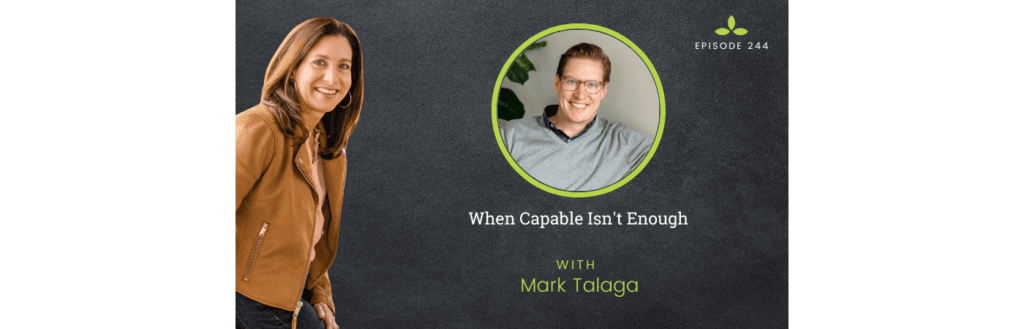
#213 Confidence Blueprint: Setting Your Young Person Up for Success with Jennifer Gershberg Transcript

Flourish Coaching
Feb 10, 2026
THIS IS AN AUTOMATED TRANSCRIPT… PLEASE FORGIVE THE TYPOS & GRAMMAR! xo-Lisa.
Lisa Marker-Robbins 00:49
If your teen, college student or young adult freezes before test, second guesses every single decision or sounds unsure when they speak, this episode is going to feel like a deep exhale. Confidence is not something that your child either has or doesn’t have. It’s actually built. Jennifer gershberg is a former University of Maryland professor and current keynote speaker and instructor who helps students build confidence by developing real skills like studying effectively, communicating clearly and tackling difficult tasks even when they feel nervous. She’s known for being nurturing but tough, which frankly, is exactly what most young people need right now. In our conversation, Jennifer breaks down how parents can help with three common confidence killers test anxiety, imposter syndrome and shaky communication. We talk about why preparation reduces anxiety, why feelings are not facts, and how to coach your child to speak with clarity, without rambling or shrinking themselves. If you want your child to rely on themselves, handle discomfort and keep moving forward, even when life is ambiguous, you’re in the right place, my friends, I’m Lisa Marco Robbins, and I want to welcome you to College and Career Clarity a flourish coaching production. Let’s dive right into a great conversation.
Lisa Marker-Robbins 02:15
Jennifer gershberg, welcome to the show.
Jennifer Gershber 02:19
Thank you so much for having me. I’m excited to be here.
Lisa Marker-Robbins 02:23
Well, I love this topic because I know you know you’re coming at this from the heart of a mom professor, just somebody who wants students to do well. I know you say you have a deep concern and commitment for student well being. And you know that a big part of that happens to be supporting them and their, you know, fundamental skills that they need to be successful. I always say, to get them to launch into adulthood. That’s what we were raising these kids for, right? Absolutely. So what do you see when you say teaching kids to be, to have those fundamental adulting skills, to be like successful, academically, professionally, even really personally, I would guess, what are those key skills that
Jennifer Gershber 03:12
you see them needing? There are a number of skills that I think students need to continually work on growing so some are in the academic realm, study skills, time management, things of that nature, critical thinking. And then there are sort of the for lack of a better word, softer skills that are every bit as important, if not more important, and these are things like communication skills, interpersonal skills, ways of interacting with different types of people, and developing all of these skills really leads to authentic confidence. So that is the ultimate goal, that students will graduate from college and go out in the world and be able to rely on themselves to sort of weather the storms the life will throw at them, yeah,
Lisa Marker-Robbins 04:12
to have that that grit and now Adam Grant calls them human skills. I’ve heard him call them, and very fitting too, because as as a mom, I never sat here and thought like, oh, I want them to come back and stay here well into their 20s. Sometimes I think kids think we want them to right? And they’re like, oh, they won’t get off my back. Or my mom sad about me growing up. I’m like, No, I really do want you to be successful. I love you and I’ll miss this phase of life. But no, that’s ultimately what our goal is, right,
Jennifer Gershber 04:44
right, to launch successful, confident, competent adults.
Lisa Marker-Robbins 04:49
I honestly, I what we see with the you know, we serve 15 to 25 year olds with this career confidence framework that we have. So I use the word confidence as well. Yeah. And what I find with the 20 somethings that come into our ecosystem, or their parents are telling me, is it really is confidence, like it keeps them stuck from moving forward, and so they get stuck in that freeze mode, right? Yes. So when you name those skills that we’re trying to build, how do we begin to develop them? What are, what are the ways? Because you This is rooted in you were a professor at the University of Maryland teaching business law and business ethics, right? Yes. And so what did you begin to see that made you say, like, I’m not even going to teach anymore. I’m going to double down on supporting kids in this area?
Jennifer Gershber 05:42
That’s a great question. What I saw was a fundamental decline in skills among students and all of the types of skills I identified before. And what is this, particularly post pandemic? But I’m not blaming covid for all of it. I think right many factors, and there are a lot of culprits here, but it is a fairly universal problem now that students tend to have more distractions. They have less focus. They are less tolerant of ambiguity. Academically, they are not as adept at studying and managing their time or at communication and professionalism. So I saw this decline among students for a couple of years post pandemic, and it concerned me enough to decide to resign, even though I loved my job. Fortunately for me, I have a great relationship with the University of Maryland, and they’ve hiring to give talks, so that’s nice.
Lisa Marker-Robbins 06:49
Okay, there were no bridges burnt. He went out of calling and a
Jennifer Gershber 06:54
greater purpose, exactly. So I say I’m out of sight, but not out of mind, right? I still come back but, but I wanted to be able to have an impact on students everywhere and not just in my classroom. So now I’m a campus speaker, and I have a course, and we can get into all of that, but my whole mission is to really help students develop these skills, and, you know, as a byproduct, more confidence.
Lisa Marker-Robbins 07:22
Well, you know, when you said the piece? Well, two things that you said that came to mind, so I love that you said, I’m not going to blame covid, like it’s a factor. But I agree with you, because I think as soon as we blame covid, it’s like, Oh, can’t do anything about it, right, right? That’s all right. Do you know there’s a psychologist and an author, Dr Meg J She has it was one of my favorite books that I read last year, and it’s called the 20 something treatment. And she asserts that the 20s have always been the hardest decade. It is not it. We can’t blame covid. It’s, yes, that impacted it. But we could go back to, you know, I was in my 20s and the 80s and early 90s. It was hard back then. It’s just a defining decade, and it’s going to be hard, right? It takes grit and resilience. So first of all, totally agree with what you said about like, we can’t because we, if we blame covid, we tap out, right? And then the other thing that you said about ambiguity, and it was impacting like, so you saw it as a professor with like, the academic thinking, is that right? Yep. So I see people uncomfortable with ambiguity when it comes to decision making around like careers or next steps or teens to even choosing a college. Yes, they want they want confidence, but they have to tackle the ambiguity, and they just don’t have the ability to tackle it. That’s what I’ve seen on both ends of the
Jennifer Gershber 09:03
coin, absolutely and there, you know, there’s this discomfort with not arriving at a very clear answer, when often the answer is it can go many different ways, and you have to pick and make a decision and sort of reason through it and arrive at a decision that is that viable one.
Lisa Marker-Robbins 09:27
You know, we give the Berkman personality assessment to all of those students that are in our launch Career Clarity course, and some people are wired for ambiguity and can handle it well, and some people aren’t. But life has a lot of ambiguity, so even if you’re not wired to naturally embrace it, we’ve got to be able to teach that. So that’s right, how do we do that? Like that’s part of what you dig
Jennifer Gershber 09:53
into, right? Yes, I mean, we do it by teaching skills. So when I think about confidence, mm. Confidence is defined as the feeling or belief that one can rely on someone or something. It’s a firm trust. So if we look at what self confidence means, it’s ultimately knowing that we can rely on ourselves to get through whatever challenge lies before us, and in order to do that, we need skills. We need competence. It is not just sort of a an empty swagger. That is not what real confidence is about. It’s really about building up our skill set so that we can tackle whatever the challenge of the day is, because it’s always something
Lisa Marker-Robbins 10:41
so for parents who are listening, and we also have educators that are listening, that are supporting young people and figuring out all the things and being successful academically, where do they start? Like, how? What can they do?
Jennifer Gershber 10:56
So there are a number of different domains that they can think about. So one of one of the big areas is test anxiety. I hear this all the time from parents and from from students who are blaming poor academic performance on test anxieties. So that’s one area that I think merits some discussion. Absolutely. You know, test anxiety is super common and but if we, if we think back to the definition of confidence that I provided earlier, this belief in ourselves, it becomes clear that we can overcome test anxiety, largely by the right preparation. The problem is students, by and large, do not have great study methods, and I don’t care if in high school, they’re getting all A’s, we all know there is rampant grade inflation in high schools, and often what happens is straight A students from high school get into college, and they Have a very rude awakening when they get their first graded assignments back or tests back, because they’ve sort of over estimated their academic prowess and skills. So I always say we need to start with the right study skills, whether, no matter what your grades are in high school, there are adjustments that need to be made going,
Lisa Marker-Robbins 12:20
I was gonna interrupt you just real quick to say, like I’ve always asserted, that at some point you hit that load, that cognitive load, where academics just become hard. Some kids, it’s ninth, you know, ninth grade, right? But if, if you breezed all the way through high school, which there’s a lot of smart kids that do, yes, they are going to hit that once they get to college, and then they’re going to flounder if they don’t already have those
Jennifer Gershber 12:49
scalps, exactly right? They they haven’t had to build up the skills.
Lisa Marker-Robbins 12:54
You know, I love that you’re talking through this, like not just the executive functioning study habits, but also the overcoming test anxiety, because you you don’t have a dog in that fight. It’s not like you have a i years ago, I owned a test prep company. It’s not like you have any benefit for students being able to test better, or any of that like you don’t. You’re probably agnostic to A, C, T or S, A, T, right? But it’s real that they’ve got to figure out the test anxiety piece
Jennifer Gershber 13:27
it is, and it’s standardized tests, and it’s college exams and it’s tests post grad, depending on their careers, whatever.
Lisa Marker-Robbins 13:36
Yeah, I would say, let me layer in. I had a guest, John Rice. I don’t know if he’s still at the University of San Francisco, but he was at the time, and we have an episode in the first year of the podcast. I’ll drop the link in the show notes, but it was about nursing school admissions highly competitive, and he made the point that if you have to apply to college test optional, you have absolutely no business going into nursing because it is so testing heavy. And then we can extrapolate that out. And we talk about this with the the the young people in our course, like, if you’re going to have to take an exam to get licensed, you better be a good test taker. Like, wouldn’t it be terrible to do all of the academic work and then not be able to pass the licensing exam. It would
Jennifer Gershber 14:22
be awful. Yeah. So, so,
Lisa Marker-Robbins 14:25
so you would say, by working on the study habits and study skills, that’s going to naturally impact test anxiety.
Jennifer Gershber 14:36
It does. It does, because when you go into a test having fully mastered the material, much of the test anxiety goes away. I’m not talking about getting rid of the normal like pre test jitters that I get an egg that’s just part of life, but I’m talking about the crippling, paralyzing test anxiety that people blame for their poor performance, and that is super common. And once you get a handle on your both the substantive material you’ve studied, but also some test taking skills and that you know how to approach different types of questions, so much of the anxiety naturally dissipates, right?
Lisa Marker-Robbins 15:20
Because they’ve got the confidence Exactly, okay? So you start with this like we’ve got to be academically successful, yes, and that’s going to result in testing success, which I would say there’s a real career piece there, correct? Then where do we shift our attention once we’ve kind of tackled that. So when would you say that one needs to be first?
Jennifer Gershber 15:46
I would say, you know, chronologically, it sort of has to be first because testing affects high school kids, college kids, stages, everyone, right? You take generally take more tests the younger you are, so But
Lisa Marker-Robbins 16:05
wouldn’t you say the the older you are, you take fewer tests, but the tests are higher stakes, but if you’re more higher cumulative they’re bigger, but older, they will have developed the
Jennifer Gershber 16:15
skills before. Then do you handle those tests and you’ve developed some more maturity and wherewithal as well, which has to help. But I definitely think most students don’t study the most effective, efficient ways, so I focus a lot on that. Once we’ve handled the academic piece, I would talk about communication, I think that is a huge area of growth for students, I would say, and covid is somewhat to blame for this, and so is social media, because students mistake social media connection For real connection, and social media engagement with real conversations, and they are just totally different. So I think communication skills across the board have declined to a concerning degree. But there are certain communication skills that parents can help their kids with to help their kids communicate with confidence. So that’s another big area. And you know one of those things is, first of all, to know your strengths and to keep them so you know what is. What is common is for very warm, empathic people to to somehow reduce themselves in keeping with their warmth and kindness. So I always say no, like the goal is to stay kind, stay connected, keep your empathy, but don’t reduce yourself in the process. And there are very specific ways that parents can help their children not reduce themselves while maintaining those strengths.
Lisa Marker-Robbins 18:09
Gosh, I love that I saw when, when I was preparing for our time together. I saw that a student once said about you that you were nurturing but tough, exactly what students need, well, but I feel like that embodies what, what you just said, right? Like you can still be warm, yes and but you, but you didn’t reduce yourself, right? And I feel like that embodies it. So you’re, you’re you’re demonstrating that. So how would a parent at home? And I do love that you’re you’re also talking about what we can do at home, because so many times we’re outsourcing to the high school, to systems, to the college, the parenting and they need us as parents.
Jennifer Gershber 19:01
They do for sure. There’s so much that we really can’t outsource, yeah, and so there are specific things we can work with our kids on. So first of all, there are certain communication patterns that tend to be disempowering. So to be aware of these patterns is really helpful moving through it and moving forward to sort of not fall into these traps. So for example, you know it’s good to use hand gestures when you talk, because it signifies that you’re not afraid to take up space.
Lisa Marker-Robbins 19:39
I don’t get my hands
Jennifer Gershber 19:40
too much. I know I do too maybe I’m overly confident. I know I’m like,
Lisa Marker-Robbins 19:44
Oh, I’m so good that you’re like, Oh, I’m a big hand talker.
Jennifer Gershber 19:47
Like I can reframe it. It’s a good thing. I am bad. I say that
Speaker 1 19:50
because I actually do criticize myself. We
Jennifer Gershber 19:53
all do, yeah, but just reframe it, because truly, it means you’re not afraid to take up space. You’re not afraid to be expressed. Aggressive and that exudes confidence. I’ve never
Lisa Marker-Robbins 20:03
thought of it that way. Thank you, Jennifer,
Jennifer Gershber 20:04
anytime also. And we all have the filler words that we use. I do too, but it’s, it’s helpful to be mindful to try to reduce them. So these are words like, um, like, you know, slowing down when we talk will help us reduce those filler words. So that’s another thing we can point out lovingly to our kids, that is, it can be helpful in not reducing their own power when they speak. Also, it’s really important. And I learned this in law school, make your main point and move through it. Move on. No rambling. Making your point clearly and boldly and then moving on when you’re done is a very confident way to speak.
Lisa Marker-Robbins 20:59
So I have a question on that. So what I’m hearing there is Be concise Yes, and sometimes when I when I talk about, like, interviewing for internships or jobs or college admissions, the other end of that is like one word and then No, no context, right? Is there? Do kids tend to talk too much, too many words, or do they tend to be too flat and concise?
Jennifer Gershber 21:31
So that’s a really, really good question, because you want to, you want to strike the right balance. Right? When I say, make your main point, I don’t you know, a one word response, a main point should include you know, your conclusion and your supporting evidence, because that, yep, is your point. But you don’t want to sort of be afraid of a silent second or two, right? Don’t want to be afraid of saying your piece and then being done, but you certainly want to be comprehensive.
Lisa Marker-Robbins 22:08
Glad you clarify that, because I could see listeners kind of deviating too far, right?
Jennifer Gershber 22:16
You don’t want to do that right, for sure. I’m glad you you asked that. Also, it’s just important in general, for Stu for students and for parents to encourage their students to do things they’re afraid to do.
Lisa Marker-Robbins 22:36
And this sort of is a hard one. Fred, this is probably the biggest, at least with the career coaching that we’re doing inside launch Career Clarity, I think this is the biggest one for that I see, yes.
Jennifer Gershber 22:49
So what we need to and this really gets into imposter syndrome, which is a very common phenomenon, but we have to repeat to our children constantly until they believe it being fearless is a myth, like fearlessness does not exist. Say that again, right? It’s not a thing. And too often people, particularly women, but I don’t want to over generalize, but it is more common among women. Too often they give away opportunities that they would be great for because they’re afraid. And you know, they’re afraid to make others mad, or they’re afraid they’re not good enough. You know they have imposter syndrome, but being visible and stepping outside of your comfort zone is so important, and when you’ve built up your skills to back you up. There’s no reason not to do it. So I think it’s really important to sort of talk about imposter syndrome.
Lisa Marker-Robbins 23:52
I think we have to normalize it, and I normalize it. I you know, we try to sometimes, I think as the adult in the relationship in the room, whether it’s a student we’re working with or our own children. We you know, we want to look like we have it together and we have the answers. And I actually think that undermines overcoming this, because I can say, at 57 years old, I am still at times going like, would they really want me, or should I ask that guest to be on the podcast or right and to normalize it? No matter how old we are, we’re going to have some of
Jennifer Gershber 24:32
that absolutely and you want to think about comfort and growth, and they’re not totally compatible with each other. The goal is to grow and push yourself, and that’s that is truly how growth and and development occur. So I agree. I mean, normalizing imposter syndrome is very important. It’s actually highest among high achieving people, and that’s something else parents can. Point out to their children. If you’re feeling it, it’s another reframe. It means you’re high achieving. It means keep doing it. You’re doing something right.
Lisa Marker-Robbins 25:09
So totally help people that their goals are not big enough if they’re not a little scared. Like, I don’t want to be delusional. If I said I want to be a NASA, you know, astronaut. Like, that’s not
Jennifer Gershber 25:20
gonna because you need the skills to back it up. Oh, perfect. Thank you. Why? Right? That’s how we know whether we’re delusional. That’s right,
Lisa Marker-Robbins 25:30
and, and I don’t even like we talk a lot about we’ve got to build self deep self awareness before we can even begin to connect to career awareness and what’s out there and what might fit. So going back to like, I can’t be an astronaut, which we can all chuckle at that, it’s not only that I don’t have the skills to back it up. I love that reframing, but when I’m really honest with myself, I would never be able to accomplish that I have a cognitive load in those scientific areas that I hit the ceiling, and that’s okay, because my cognitive ceiling on other things is very high, and that’s where I should go.
Jennifer Gershber 26:13
That’s exactly right. And it’s about knowing yourself and knowing your strengths and knowing your interests. And you know, being realistic of those guides exactly, but it’s really important, I think, to remind ourselves and our children that feelings are not facts, and just because we feel a certain way does not mean it’s based in reality. And also just reiterating to your kids that not only is it normal to experience imposter syndrome, but actually new experiences are supposed to feel uncomfortable. They’re says it feel hard and weird and just different, because this is literally how growth occurs. So it, you know, normalizing the feeling of discomfort, I think, is very helpful. And you know, this applies when your kids start college and they don’t know what end is up because they’re in a brand new place and feeling uncomfortable, or they’re feeling overwhelmed in an internship, or, you know, in their first full time job, whatever that new challenge is just reminding your kids as often as needed and as frequently as they will listen, that it is normal to feel this way. And you know, just because the experience is new,
Lisa Marker-Robbins 27:37
you know, you just said something, and I do have to give a shout out to your course that you have. You’re welcome to college, you know, boot camp for incoming students. Because here’s here’s what I found. This is fantastic information for what we can do as parents. And I mean, Jennifer, you’ve given me things that I still will still be helpful to me with. You know, my kids are all in their 20s. I’m an empty nester. I’m on the other side of what most of our listeners are doing in the stage of life that they’re out right now. But often, when it’s that more challenging feedback or that difficult feedback, they hear it better from somebody else. Yes. And so the number of times I have a parent say to me like, I’ve said that, but you said it in that Q and A that live Q and A you had, and it landed differently get out, and that’s why I feel like what you what you have, your framework, and how you teach, this is so good that, you know, I just have to give a shout out for your course. And I know it’s you’re it’s really designed to, you know, let’s go be successful freshman year. I mean, freshman year of college is hard, right? It’s not just academically, like you got all this freedom. You got to learn how to manage yourself better. Hopefully you already have some of those skills. But so is your course? Would you say only incoming freshmen or freshmen should take it?
Jennifer Gershber 29:06
No age groups. So I’ve been told I’ve had students in the beginning of high school take it, and I’ve had seniors in college take it, and all honestly, have found it helpful.
Lisa Marker-Robbins 29:17
Yeah, I mean, I’ve seen that side of it, I’m sitting there going like, Oh, so many people need this, and I know some adults that could use
Jennifer Gershber 29:25
it too. Yeah. I mean, there are some, definitely, a lot of the advice in there can be generalized to other other people in other situations as well. But when I created it, I had new freshmen just in my mind, which is, well, because you’re a college professor, it was your world, right? And, and, you know, I really tried to focus in the course on the areas that I know are basically universal struggles among college students, because I wanted them to start out really strong and just miles ahead. Yeah. It just gives them more skills and confidence, which is real.
Lisa Marker-Robbins 30:03
I’d imagine, if somebody’s, you know, high school junior or senior have accomplished and tackled all of that like they’re gonna start out having a much better freshman year.
Jennifer Gershber 30:13
I have a lot of high school students take the course as well, and it’s, I think it’s helpful. The earlier, the better.
Lisa Marker-Robbins 30:22
I love it. Well, Jennifer’s got a special link for us, flourish, coaching, co com, forward, slash, incoming. So if anybody wants to check that out, I can speak to it. It’s, looks fantastic. I mean, I haven’t done every single lesson in it, but you hit all the things that I know that this age group needs for sure. Thank you so much. Well, this has been so helpful. I think, I mean, I’m in my empty nest life. I’m like, you’ve reframed some things for me professionally, for interacting with my my own 20 somethings. And I just so appreciate you taking the time to be here.
Jennifer Gershber 31:00
Well, it was a privilege to be here, so thank you for having me. I loved it.
Lisa Marker-Robbins 31:10
Jennifer just handed you a practical framework that you can use at home to help your young person build real confidence through skills, not swagger. If you want to go deeper with the exact tools. Jennifer teaches. She has a course called Welcome to College boot camp for incoming students. Even though it was really designed with incoming students in mind, she’s found that it’s useful for high schoolers, college students, and honestly, any young adult who needs stronger study habits, executive functioning skills, better communication and more confidence. You can check it out at flourish, coachingco.com forward slash incoming. Jennifer, thank you for bringing both the truth and practicality to this episode and to parents listening. You are not behind my friends. Pick one skill from this episode and start there. Small shifts create big momentum. If today’s episode was helpful to you, do me a favor. Will you share with a friend who needs this too? We are all better when we’re doing this together and sharing, following the podcast, rating and reviewing will help us resource more young people to confidently launch into a successful future.